How to Read the Rummy Discard Pile Without Guessing
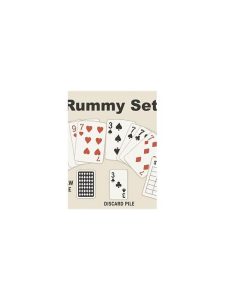
The discard pile is a running record of what other players did not want. It is not a perfect map of their hands, but it can help you make calmer decisions. The useful habit is to treat every visible card as evidence with a confidence level, rather than assuming that one discard reveals an entire plan.
Begin by noticing the cards that appear close together in rank or suit. If a player discards a seven and later releases an eight from the same suit, they may have abandoned a possible sequence. That does not mean every nearby card is safe. It only tells you that the player has shown less interest in that particular connection. Keep the observation flexible because a later draw can change a hand quickly.
Next, watch repeated ranks. A player who throws away one queen may still hold another queen for a set. A single discard is weak information; two or three related discards are stronger. When you consider taking a card from the pile, ask what useful combinations it gives you and what information your choice may reveal to the table.
The discard pile also helps with your own discipline. Before drawing, compare the top discard with the unknown card. If the visible card completes a pure sequence or creates two realistic paths, it may be worth taking. If it merely looks attractive because it is a high card, leave it. A pretty card that has no immediate structure can keep your hand crowded.
Avoid reading the pile after every turn as though it were a puzzle with one answer. Use three questions instead: What has become less likely? What remains uncertain? Which card in my hand is now hardest to justify? This keeps observation connected to action. It also prevents you from chasing a card simply because another player discarded something nearby.
Finally, remember that the discard pile is public information, not a promise. Opponents can discard defensively, accidentally, or as part of a temporary plan. Combine the pile with your own hand, the pace of the round, and the number of cards still needed for a valid declaration. Good reading improves choices, but it never replaces a clear hand structure.
If you practice this method, review only a few meaningful cards after each round. Ask which observation changed your decision and whether that change helped your structure. Over time, the pile becomes a source of measured clues rather than a stream of distractions. That restraint is valuable because a visible card can be informative without being worth taking.