Rummy Guide: Separating a Real Sequence From a Near Miss
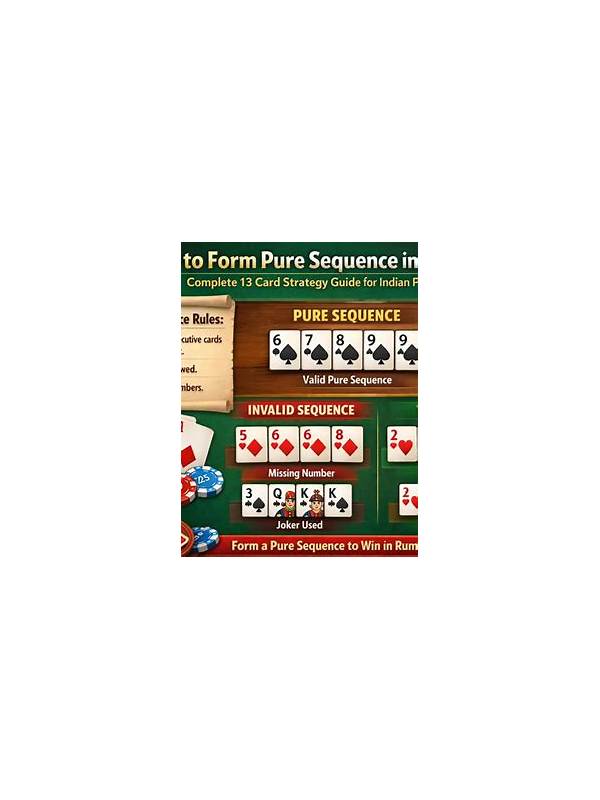
Connected cards create hope quickly. A pair such as five and six appears close to a sequence, but closeness alone does not make a plan strong. Separating a dependable structure from a near miss helps you keep the hand flexible and avoid spending too many turns on one exact draw.
Begin by checking the suit. A same-suit pair has a direct path to a sequence, while two adjacent cards of different suits do not. A same-suit pair can still be weak if the missing card is unlikely to appear or if keeping both cards blocks a stronger group. Always inspect the entire hand before assigning value to the pair.
Next, count the useful completions. A pair in the middle of a suit may connect on either side, while a pair at an edge has only one obvious direction. Three connected cards are stronger evidence, but they still need to be checked against the table’s declaration rules. A sequence that is not pure may be useful later, yet it may not satisfy the required first sequence.
Jokers and wild cards add flexibility, but they can also disguise a weak plan. Ask whether the structure remains meaningful without the wild card. If the answer is no, keep the plan provisional. You may need the wild card elsewhere to repair a difficult group, and committing it too early can leave the rest of the hand exposed.
Give near misses a deadline. One or two turns can be reasonable when the pair has several outs and the rest of your hand is safe. Continuing longer requires evidence: a helpful card has appeared, the discard pile supports the idea, or the pair now joins a broader structure. If none of those occurs, release the least valuable part and reassess.
The practical test is simple: name the next card you want, list at least one alternative improvement, and check the penalty of waiting. If you cannot name an alternative and the waiting cost is high, you are probably looking at a near miss. Strong rummy play is not about avoiding every uncertain card. It is about recognizing uncertainty early enough to make a controlled change.
This test also helps after a joker appears or another player takes a useful discard. New information can upgrade a near miss, but it can also make the original route less attractive. Recheck the pair instead of defending it automatically. A plan earns another turn when its evidence improves; it does not earn one merely because you have already invested time in it.