Rummy Comparison: Memorized Rules Versus Written Rules
Memorized rules make a table feel fast, but they can also hide small disagreements. Written rules take a moment to consult, yet they create a common reference. The better choice depends on the format, the players, and the cost of being wrong.
Memory works well when the same group uses one stable version repeatedly. Experienced players can begin quickly because they share the same expectations. Even then, memory is vulnerable after a long break or when a rarely used scoring detail appears. Familiarity should be treated as a convenience, not proof that every detail is current.
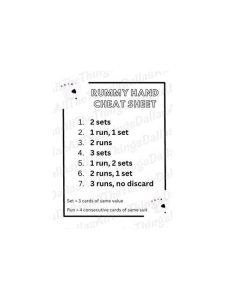
A written reference is especially useful for mixed groups, new players, and formats with several exceptions. It does not need to be a complete rulebook. A one-page note can list the hand requirement, joker treatment, turn sequence, penalty calculation, and procedure for challenging a declaration. Short notes are more likely to be read before pressure rises.
Compare the two approaches by asking four practical questions. Will a new player join? Has the format changed recently? Could an error affect the score? Does the table often stop to debate wording? If any answer is yes, keep a written version available. Reading it before dealing is less disruptive than reconstructing a rule after an argument.
Written rules should still be understandable. Use one example for any unusual condition and mark the date or source of the note. If the group agrees to a house rule, label it as such instead of presenting it as a universal rule. Memory remains valuable for flow; written guidance protects consistency. Used together, they let the table move quickly without turning uncertainty into conflict.
The written note should have an owner and a review habit. A group can ask one person to update it after a rule is verified, then share the new version before the next session. Avoid maintaining several competing copies. When a change is proposed, mark it as pending until the players agree. This simple version control prevents a confident but outdated note from becoming the source of the very confusion it was meant to solve. For informal play, the reference can be as small as a card beside the dealer with five agreed points. For organized play, use the published rules and identify which questions should go to an official decision. The right amount of writing is the amount that prevents repeated uncertainty without slowing an ordinary turn.