Rummy FAQ: When Can a Long Sequence Become a Liability?
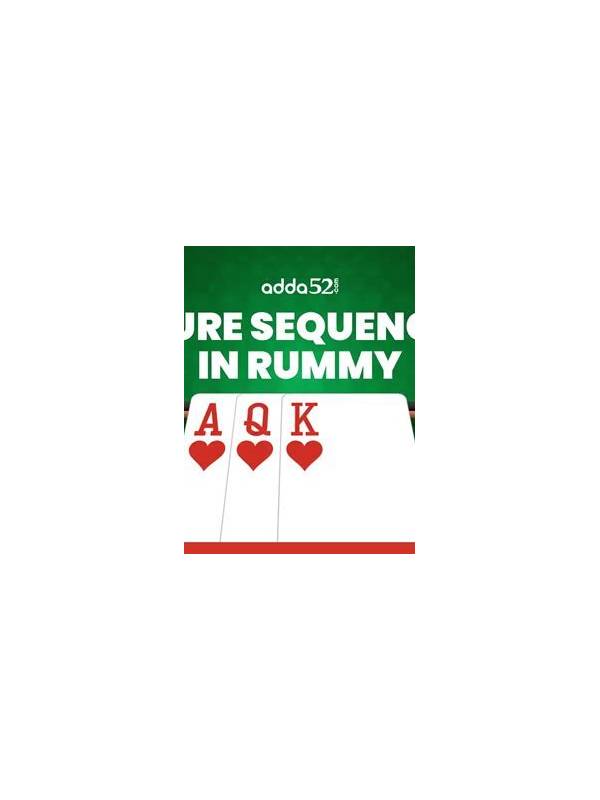
A longer sequence does not always improve a rummy hand. It can reduce the number of ungrouped cards and make a declaration easier to inspect, but it may also consume cards that could support separate groups. Evaluate the sequence as part of the whole hand.
First check whether it is legal and useful under the table’s rules. A long natural sequence may help satisfy a pure-sequence requirement, while a sequence containing a joker may not serve the same role. Do not count length before confirming the rule that gives the group value.
Then inspect the cards at its edges. A sequence built from three cards may have several extension options. A very long sequence can be less flexible if the middle cards are locked together and the remaining hand has weak fragments. Ask whether extending it actually improves your next choice or merely makes the group look impressive.
Compare the alternative groups. If breaking one card from the sequence would complete a second legal group, the split may be better. If the sequence protects a high-penalty card or secures a required structure, preserving it may be more important. Consider the cards outside the sequence, not just its internal order.
Timing also matters. Early in a hand, preserve routes that can adapt. Near a possible declaration, a longer secure sequence may reduce checking errors. In either phase, test the arrangement after each draw. A sequence that was valuable two turns ago may become less important when another group is nearly complete.
The useful question is not “How long is this sequence?” It is “What does this sequence allow the entire hand to do?” Keep it when it strengthens legality, lowers penalty, or creates a clear route. Reconsider it when it traps flexible cards or delays a more balanced completion.
If the answer is still unclear, compare the next two turns rather than the entire future hand. A long sequence that supports two reasonable draws may be safer than a shorter group that needs one exact card. That small horizon keeps the decision practical and prevents endless speculation about every possible continuation. Remember that a long sequence can also simplify a final check. Fewer loose cards may mean fewer accidental omissions during declaration. That benefit matters only after the group is legal and the remaining cards still have a credible arrangement. When comparing arrangements, count the loose cards as well as the sequence length. A shorter group may leave a cleaner hand and a clearer next discard.