Rummy Guide: Compare Group Quality Before Discarding
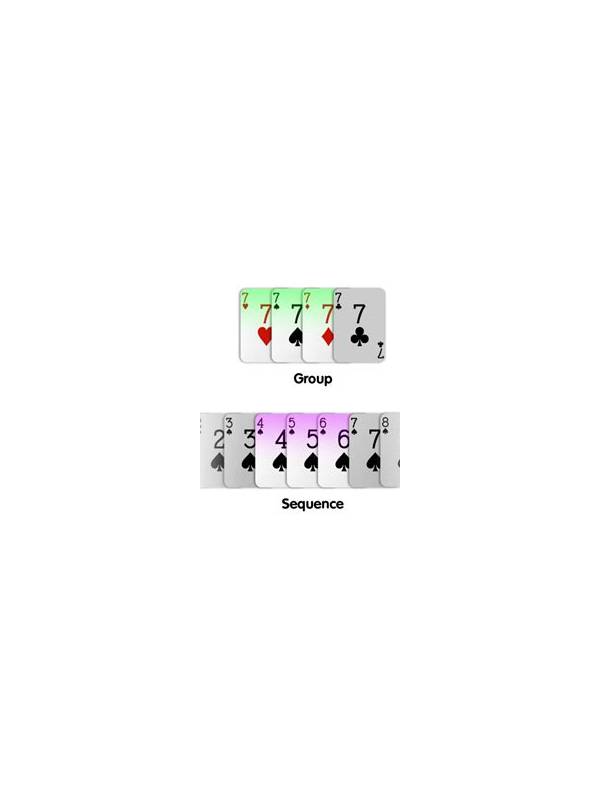
Not all pairs and partial groups deserve equal treatment. Before discarding, compare their quality instead of counting only how many cards are already together. A strong group is close to valid, uses cards with useful alternatives, and does not create an expensive collection of leftovers.
For a sequence candidate, check the gap between ranks and the suit requirement. Consecutive same-suit cards have a clear path, while separated cards may need a precise middle draw. For a set candidate, check whether the ranks match and whether the remaining hand can still form required sequences. A group that looks complete may be less valuable if it consumes the only card that connects another route.
Next, estimate completion cost. How many additional cards are needed? Are there several possible cards or one exact card? What happens if the next draw misses? Keep the answers approximate; rummy is uncertain and the rules vary. The comparison is useful because it separates a nearly stable group from an attractive but narrow idea.
Finally, inspect flexibility. A card in a partial group may also fit elsewhere, while another card may have only one job. Preserve flexible cards when they help multiple credible arrangements, but do not use flexibility as an excuse to retain high-point deadwood indefinitely. A group’s value changes as the hand gets shorter.
Practice by naming the best and worst group in a random hand before choosing a discard. Explain the difference in one sentence. This habit improves visual judgment and reduces impulsive releases. The objective is a valid, manageable hand, not the prettiest arrangement at one moment. The objective is a valid, manageable hand, not the prettiest arrangement at one moment.
Suppose one group is a same-suit run missing one card, while another group is a matching-rank pair with several possible mates. The pair may look equally attractive, but its completion cost and effect on the remaining cards decide the comparison. If keeping both leaves a high-point single, the hand needs a release plan. State which group is primary and what evidence would change that choice. This simple explanation makes later review much easier than remembering only the card you discarded. Group quality should be judged relative to the hand’s requirements. A pair may be weak in a format that demands several sequences, while it may be useful in another variant. Confirm the format before applying a familiar strategy. When rules differ, write down the required structures at the top of a practice sheet. This prevents a technically tidy plan from failing because it was designed for the wrong game.