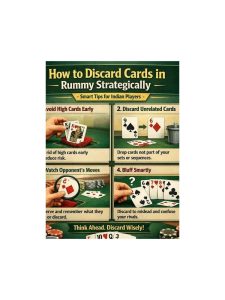
Rummy How-To: Audit a Discard Without Replaying the Whole Round
Reviewing every card in a completed rummy round can take longer than the round itself. A compact discard audit focuses on the moments that teach you something. It is especially useful when you want a repeatable learning routine rather than a detailed record of every draw.
First, identify the turning point. Ask when your original plan stopped being useful. It may have been a draw that created a better group, a visible card that removed a route, or a discard made under time pressure. If you cannot identify a turning point, choose the decision that felt least certain at the time.
Second, describe the available alternatives without judging the outcome. List the card you discarded, the card you kept as its main competitor, and one plausible alternative action. Avoid saying the alternative would definitely have won. You are comparing information available then, not information revealed later.
Third, inspect the reason for the choice. Was it based on point exposure, group potential, observed discards, a rule requirement, or habit? A valid reason can still lead to a poor result because the draw is uncertain. Separating reasoning from outcome prevents hindsight from rewriting the decision.
Fourth, write one adjustment for next time. Make it behavioral and narrow: check the discard pile before releasing a middle card, set a deadline for an isolated high card, or confirm the variant’s declaration rule. Do not create a dozen new rules from one round. One adjustment is easier to test.
Finish by recording what the audit cannot prove. A single hand cannot show that a strategy always works, that an opponent had a particular group, or that a different discard would have guaranteed success. If the same issue appears across several reviews, it becomes a stronger topic for practice.
This four-part audit takes only a few minutes: turning point, alternatives, reasoning, and adjustment. It keeps review focused, protects your time, and produces lessons that can be checked in later sessions. If the round involved a rules question, record that separately from the strategic decision. A technically illegal move needs a rules correction before it needs a strategy lesson. This separation keeps the audit accurate and makes the next practice session more focused. Review should reduce confusion, not add a second uncertain narrative.
Use the same audit headings each time so entries remain easy to scan. Consistent headings make repeated patterns visible and stop a dramatic result from taking up more attention than a quiet, recurring habit.