Rummy How-To: Build a Discard Decision Tree
A discard decision tree is a short sequence of questions that narrows your options. It is useful for practice because it gives you a repeatable process, but it should remain flexible enough to respect the hand, the format, and the stage of play.
Start at the top with legality and urgency. Is your hand already complete under the applicable rules? If so, verify before declaring. If not, identify whether a new card creates a clear improvement that changes the discard entirely. This prevents you from applying a prewritten rule after the hand has already changed.
The next branch separates confirmed structures from speculative ones. Protect combinations that are legal and useful, but do not protect every pair or near-sequence equally. For each uncertain group, name its exact missing cards and whether those cards are still realistically available. A route that requires several linked events should move down the priority list.
Then compare loose cards. Consider penalty, replacement burden, and the information the discard may reveal. If two cards are similar, prefer the one whose removal leaves the hand easier to complete. If one card is high value but has a strong role, do not discard it automatically; evaluate its role and its alternatives.
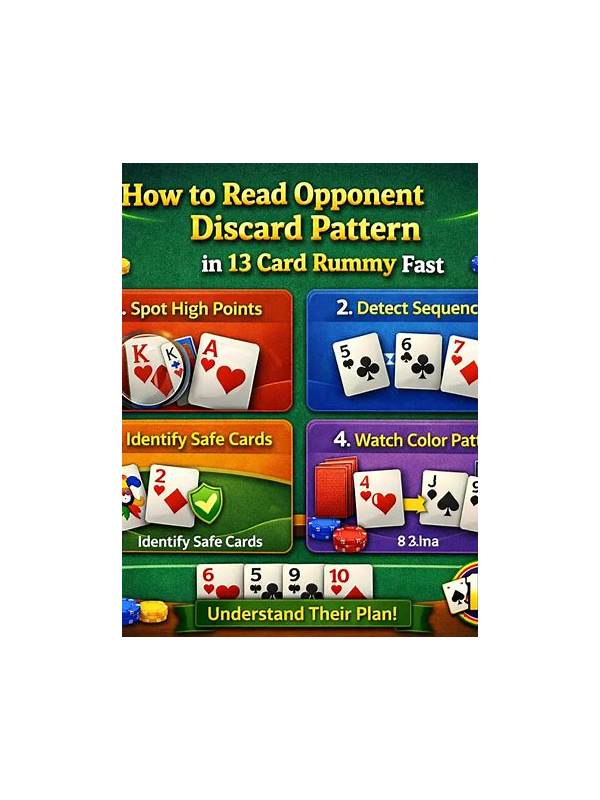
Finish with the opponent check. Could the discard obviously complete a route suggested by the visible play? If yes, see whether another discard offers similar personal improvement. The check should adjust a close choice, not force you to hold damaging cards indefinitely.
Write the tree in five lines for practice: verify legality; identify the new improvement; protect confirmed structures; remove the weakest provisional or loose card; compare information risk. After several hands, note where the tree was too rigid. A good decision tree reduces mental noise while leaving room for evidence. It is a guide for thinking, not a promise that the same discard is correct in every layout. Keep the tree visible during practice, but do not expand it every time a hand becomes complicated. If a new branch appears, write it down for later review and continue with the simplest safe question available. After the session, remove redundant branches and refine those that caught a real mistake. This keeps the tool small enough to use. Its value comes from consistent attention to important factors, not from a rule for every pattern. A compact tree should make a difficult turn clearer, not add another source of pressure.