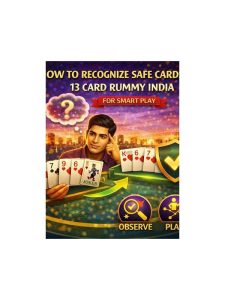
Rummy Strategy: Use a Minimum Improvement Test for Loose Cards
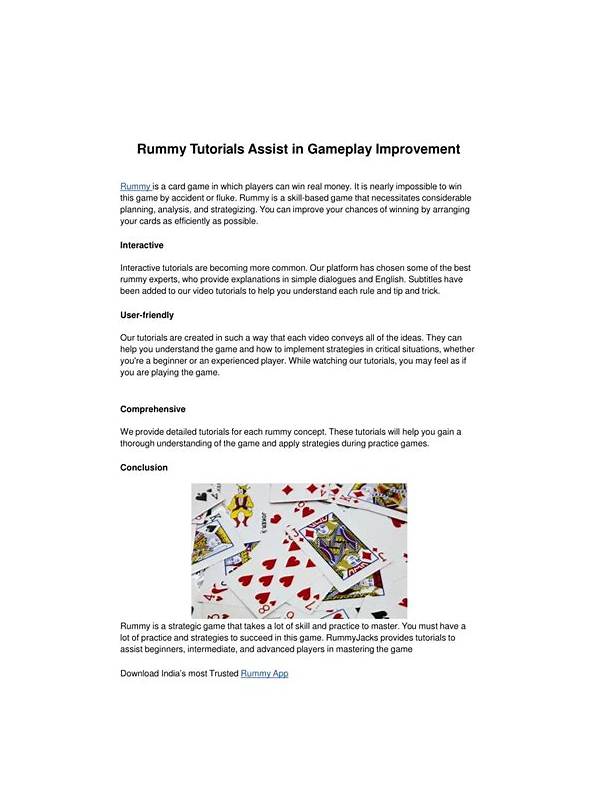
Loose cards consume space in a hand while offering uncertain future value. They are not automatically bad; a loose card can become a bridge or complete a set after one draw. The problem arises when it is kept without a defined improvement test. A minimum improvement test asks what must happen next for the card to remain worth holding.
Start by naming the card’s possible roles. It may connect to a same-suit neighbor, match a pair elsewhere, or serve as a low-penalty temporary hold. If you cannot describe a role, the card is a strong discard candidate. If you can describe several roles, identify which one is most realistic instead of counting every remote possibility.
Then define the minimum signal. For a 9 of diamonds held beside an 8 of diamonds, the signal might be a 7 or 10 of diamonds. For a lone queen, the signal may be a matching queen or two nearby cards, depending on the format. The signal should be concrete enough that you can recognize it immediately.
Give the card a review point. You may reassess after the next draw, after two turns, or when a new group becomes stronger. Without a review point, temporary holds become permanent by inertia. When the review arrives and the signal has not appeared, compare the card with the weakest alternative. If the card still has no superior route, release it.
Consider the cost of waiting. Holding a loose card can preserve a possibility, but it can also prevent you from testing a better structure. It may carry more points, reveal information to an opponent when discarded later, or make the hand harder to read. These costs belong in the comparison.
The test is not a rigid timer. New information can make a previously weak card valuable, and a visible discard can remove a route. The purpose is to prevent vague optimism from controlling the hand. Ask what evidence you are waiting for, how long you will wait, and what you will do if it does not arrive.
With practice, this becomes a quick internal sentence: “Keep this only if X appears by Y; otherwise it goes.” That sentence turns an uncertain hold into a deliberate experiment. Write the rule down during practice if the same loose card type causes repeated hesitation. Later, compare whether the rule helped the hand or merely made the discard feel easier. A test should remain open to revision when new evidence shows that the threshold is too strict or too generous.