Tracking Unseen Cards in Indian Rummy: A Light Method
You do not need to remember every card in a rummy round to use information well. A light tracking method focuses on the few cards that matter to your current hand. The goal is not to perform a complicated calculation; it is to reduce repeated guesses and recognize when a draw is becoming unlikely.
Start with your own requirements. If you need a six or nine of a particular suit to complete a sequence, write that need mentally as one short note. If a card that would help appears in the discard pile, update the note. If you see another copy in a player’s discard or meld information, lower your confidence. You are not trying to know where every copy is; you are judging whether continuing the chase remains sensible.
Track categories rather than full histories. One category can be pure-sequence cards, another can be cards that complete a set, and a third can be expensive cards with no current role. This makes the method useful when the table is fast. Whenever you draw, ask whether the new card moves one category forward. If it does not, it may be a candidate for release even if its rank appears interesting.
Use thresholds to protect your attention. After one missed draw, a plan may still be reasonable. After several turns with no progress, compare the plan with an alternative. A narrow draw that needs one exact card is very different from a plan that can improve through several ranks or suits. The more limited the route, the sooner you should set a deadline for abandoning it.
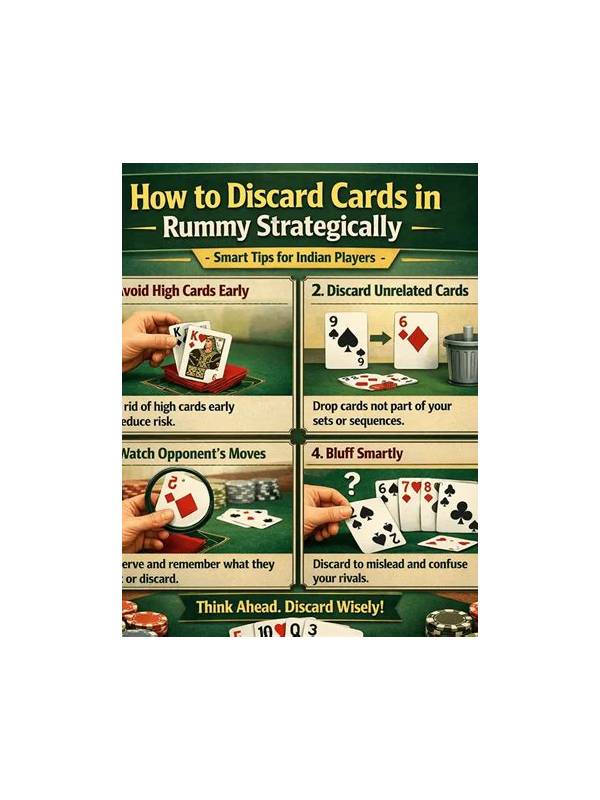
Tracking is also helpful when deciding whether to take a visible discard. If you have already seen related cards leave the game, the discard may be less valuable than it looks. Conversely, an unclaimed card that fits two of your structures can deserve attention. Neither observation guarantees an outcome, but both improve the quality of your estimate.
Keep the method private and brief. You can use a mental note such as “two needs, one expensive card” and refresh it after each turn. Perfect memory is unnecessary, and overtracking can distract you from legal declaration requirements. The best system is the one you can apply consistently while still checking your hand, the discard pile, and the rules of the table.
Do not treat unseen cards as a promise that a draw will arrive. A card may remain technically possible while being strategically poor to chase. Tracking is most useful when it tells you to lower confidence, broaden a route, or release an expensive card. In that way, it supports better exits as much as it supports hopeful improvements.