Rummy Comparison: Early Melds Versus Flexible Holdings
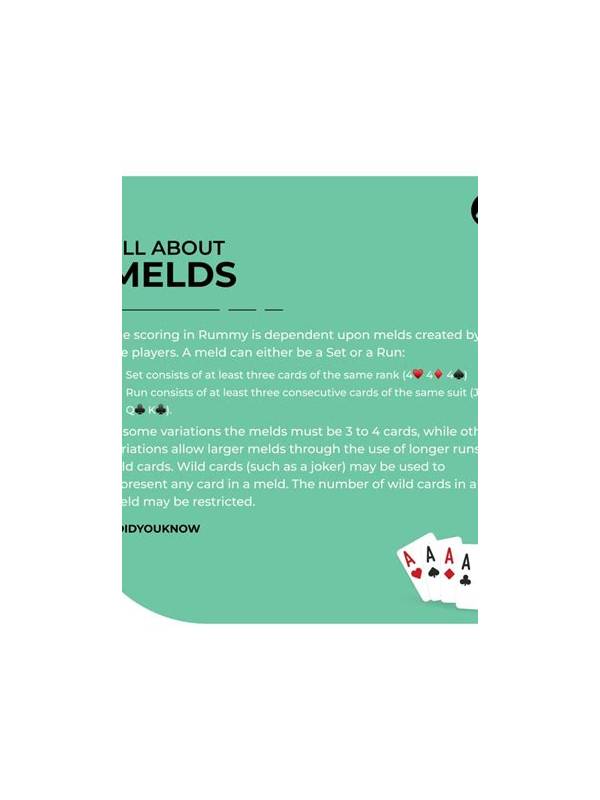
An early meld gives visible structure to a rummy hand, while a flexible holding keeps several future arrangements open. Neither is always better. The right choice depends on the rules, the requirement still missing, and how much information the rest of the hand provides.
An early pure sequence is often valuable because it satisfies an important condition and reduces uncertainty. Once it is complete, you can examine the remaining cards more calmly. An early set may also be useful, but it should not distract you from a missing pure sequence when the format requires one. Always check the table’s scoring and declaration rules before applying a general principle.
Flexible holdings include middle cards, pairs with multiple neighbors, and cards that can join more than one plausible group. Their value is optionality. They let you react when a needed card appears in the discard pile or when a route becomes unavailable. The drawback is that flexibility can be imaginary. A hand full of pairs may feel promising while still lacking a complete sequence.
Compare the two approaches with three tests. First, what requirement does the meld satisfy immediately? Second, how many useful routes remain after the meld is fixed? Third, what is the point cost if the flexible cards fail? If the meld answers a major requirement and leaves manageable leftovers, it usually deserves priority. If it consumes cards that are the only bridge between several routes, pause before committing.
Timing matters as well. Early in a hand, you can preserve options because many unseen cards remain. Later, a clean completed group may be preferable to a broad but unfinished idea. Set a review point after several turns. At that point, ask whether the flexible holding has actually improved or merely survived.
This comparison is not a command to meld as soon as possible. It is a way to make the trade-off visible. Security helps when it removes a serious obligation; flexibility helps when it creates realistic alternatives. Strong decisions explain which benefit matters more in the current hand and what evidence would change that judgment.
Imagine the next two draws as a practical test. If the meld remains useful under several ordinary cards, it has durable value. If it works only when one exact card arrives immediately, call it a narrow route and set a deadline. This thought experiment does not predict the deal; it exposes whether your confidence comes from structure or from hope.