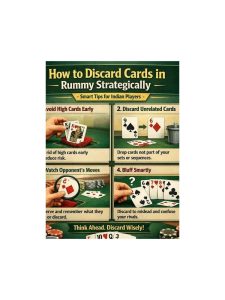
Rummy FAQ: Can a Discard Be Too Early to Judge?
An early discard can be difficult to evaluate because the table has revealed little information. Calling it obviously safe or obviously dangerous may be premature. The better approach is to record what was visible at the time and update the assessment as new cards and discards appear.
First, separate your own-hand evidence from table speculation. Did the discard leave a loose high card, improve a required group, or remove a card with no credible home? Then ask whether it might fit an ordinary sequence for another player, while remembering that one discard cannot reveal their full plan.
Next, note the information cost. A discard that looks harmless early may become useful later when neighboring cards appear. Conversely, a card that seemed dangerous may lose importance if the relevant route never develops. Avoid judging the original choice solely from a later outcome.
Timing matters. Early in the hand, keep the assessment provisional. Later, once more structure is visible, make the judgment more decisive. A small review point—after the next few relevant discards—prevents the early uncertainty from lasting forever.
Also inspect the rest of your hand. A discard decision is strong only in context: what did you keep, what requirement remains, and what alternative was available? A low-point card may still be a poor discard if it was your only connector.
Keep the conclusion modest. Say “the discard was reasonable with the available information” rather than “the discard was definitely safe.” This language supports learning without pretending that an incomplete table can be read with certainty. One useful review question is, “What did I know then that I do not know now?” If the answer is only the later result, do not use it to punish the earlier decision. If the answer is a new rule detail or a repeated table pattern, record that genuine lesson.
This approach is especially helpful when reviewing an early hand. Early choices often have little table information, so a fair review should value reasonable process over hindsight. Keep the lesson specific enough to use next time.
If the same uncertainty appears repeatedly, turn it into a preparation question before the next session. Knowing which rules, limits, or table signals matter most can make early decisions easier without pretending they become certain.
This approach is especially helpful when reviewing an early hand. Early choices often have little table information, so a fair review should value reasonable process over hindsight. Keep the lesson specific enough to use next time.