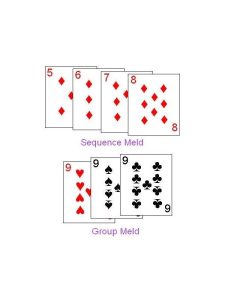
Rummy FAQ: Should You Hide a Strong Partial Group?
A strong partial group is a set of cards that looks close to a legal combination but is not complete. Players often feel that such a group must be protected because it is visible progress. That instinct can help, but it can also trap a hand. The right question is not whether the group looks promising; it is what alternatives disappear when you keep it.
It also helps to distinguish a partial group from a completed group with an extra card nearby. Once a legal group is complete, protect it according to the rules and your overall plan; do not casually break it because a nearby card looks exciting. Before completion, however, the group remains a candidate. Using the same label for both situations can hide an important difference in risk and should be avoided during a review.
First, name the cards that could complete the group. If several ordinary cards would help, the group has broad potential. If only one exact card works, it is a narrow wait. Count the ways the group can improve and compare that number with the value of the cards you must retain. This is a practical estimate, not a promise about what remains in the deck.
Next, check whether the partial group overlaps with another route. An overlapping card may be doing useful work elsewhere, so protecting the group may cost more than it appears. A group that stands alone is easier to evaluate. If keeping it forces you to discard a flexible connector, the apparent progress may actually reduce your options.
Consider timing as well. Early in a hand, a broad partial group can deserve patience because there is time to adjust. Later, the same group may need a deadline. If the missing card has not appeared and the hand has become crowded with unrelated cards, continuing to protect the group can be an emotional choice rather than a useful one.
Hiding the group is not a separate trick. In a digital game, other players do not need to see your sorting order, but secrecy does not improve the mathematics. Keep your arrangement clear for yourself, and avoid treating a hidden group as more valuable simply because it is private.
Review the decision by asking what you gained and what you surrendered. If the group completed, was the earlier flexibility worth sacrificing? If it failed, did you wait past the point you had set? These answers will vary by hand. The useful habit is to judge partial groups by completion breadth, overlap, and timing rather than by appearance alone.