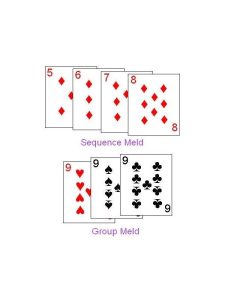
Rummy FAQ: Should You Keep a Pair With No Immediate Link?
A pair with no immediate link often feels too promising to discard. It might become part of a set, or one card might join a sequence later. The correct question is not whether improvement is possible. Almost anything is possible. Ask whether the pair has enough realistic improvement to justify keeping it while stronger structures compete for attention.
Start by identifying the pair’s jobs. Can either card join a nearby sequence? Can another card of the same rank complete a set? Are both cards low-cost if they remain ungrouped? If the pair has only one narrow improvement and no connection to the rest of the hand, it may be weaker than a single card that supports a broad route.
Next, examine opportunity cost. Holding the pair uses space that could contain a flexible connector or a card supporting a nearly complete meld. It can also make your discard decisions harder because the pair looks symmetrical. Symmetry is not evidence of strength. Two cards that share a rank may still have fewer useful futures than two cards that connect across suits.
Timing matters as well. Early in a hand, a modest pair can be a reasonable information-holding choice when the rest of the hand is unsettled. Later, the same pair may need to justify itself with clearer support. Set a review point: after another draw, after a failed route, or when your hand needs a clean discard. At that point, evaluate it again from the current position.
If you keep the pair, name the improvement that would change your mind. “I will keep it if a third matching rank appears” is clearer than “it might work.” If that improvement does not arrive, release the pair without treating the decision as a loss. The pair provided information about what was available, but information has value only when it can change your next choice.
This approach keeps pair decisions practical. It neither rejects every unlinked pair nor protects every attractive possibility. Judge the pair by its routes, opportunity cost, and deadline. A disciplined review leaves room for useful surprises while preventing a small coincidence from becoming the center of the entire hand. Remember that discarding the pair does not erase the information it gave you. You learned that two cards shared one possible direction, but you also learned whether that direction competed with better structures. Treat the release as a normal update to the plan. This attitude makes it easier to abandon a weak idea before it becomes expensive.