Rummy Guide: Separate a Real Plan From a Hopeful Pattern
A rummy hand can appear promising before it has a workable plan. Two cards may share a suit, three may sit near one another, and a joker may seem to repair any gap. That visual promise is not the same as a structure you can actually complete. Separating a real plan from a hopeful pattern helps you avoid holding cards only because they look related.
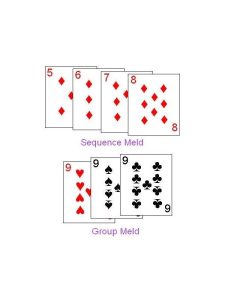
Start by naming the exact groups you are considering. For each possible sequence or set, write down the cards already present and the cards still needed. A real plan has a short, understandable list of missing links. It also has a legal shape under the rules of the table. If you cannot explain what completes the group, you may be looking at a hope rather than a plan.
Next, check the number of alternatives. A sequence needing one of several cards is more flexible than one needing a single exact rank. However, do not count every theoretical card equally. A card that has already appeared in a discard pile, or one that would expose a valuable discard, has less practical value than an unseen option. Flexibility is about credible routes, not imagination.
Give each hopeful pattern a discard point. If the needed card does not arrive after a reasonable number of turns, decide what you will release. This prevents sunk-cost thinking. Keeping a pattern indefinitely can leave the rest of the hand untouched while your useful cards become harder to combine.
Compare the pattern with the best alternative. Ask whether dropping it would create a simpler group, reduce penalty points, or improve your ability to verify a declaration. A real plan should earn its place by improving the whole hand, not just by looking attractive in isolation.
Finally, reassess after every meaningful draw. A plan can become real when a connector arrives, or become hopeful when an important card is no longer available. Treat the distinction as temporary information, not a permanent judgment. Clear tests keep your hand flexible and make discards easier to explain.
You can strengthen the test by asking what would make the pattern worse. If one missing card is taken or discarded, does another route remain? If not, the pattern is fragile even when it looks close. Also check whether the pattern competes with a completed group or requires you to keep several unrelated cards. A real plan should improve the whole hand, not just one attractive corner.
Review the pattern at a fixed moment, such as after the next draw or after a relevant card appears. A fixed trigger keeps you from changing your judgment after every ordinary discard. When the review arrives, either promote the pattern because evidence improved, or release its weakest card. This creates a practical boundary between patience and delay.