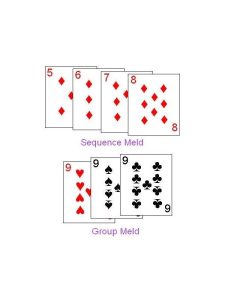
Rummy Comparison: Short Draw Routes and Long Draw Routes
Every incomplete rummy group has a route length: the number of useful improvements needed before it becomes part of a legal hand. Short routes are attractive because they can reduce uncertainty quickly. Long routes may offer more possible shapes, but they consume turns and can keep penalty cards in the hand. Comparing them makes the trade-off visible.
A short route usually has one missing card or a nearly complete arrangement that needs verification. Its main benefit is speed. Completing it may free your next decision to focus on the difficult part of the hand. Its weakness is that a single exact requirement can be fragile. If the card is scarce or another player is likely to need it, the route may not be as easy as it looks.
A long route may begin with a loose pair, a high card that could join two groups, or a joker that has several placements. Its strength is optionality. You can change the shape as new cards arrive. Its cost is opportunity: every turn spent waiting is a turn in which the rest of the hand remains unresolved.
Compare routes on four measures. First, count the credible missing cards. Second, estimate the penalty if the route fails. Third, ask whether holding the route prevents a simpler discard. Fourth, check whether the route improves your ability to make a legal declaration. Avoid comparing only the excitement of a possible completion.
You can combine the two types. Keep a short route as an anchor while giving a long route a clear deadline. If the long route has not improved by that deadline, release the card that contributes least to the anchor. This approach preserves some flexibility without allowing every possibility to survive.
The best route changes as information changes. A previously long route can become short when a connector appears. A short route can become unattractive when its missing card is discarded or taken. Review route length after important draws, and remember that a quick completion is useful only when it leaves the rest of the hand manageable.
One practical comparison is to imagine the next two draws. If the short route completes immediately, what remains? If the long route gains one connector, does it become substantially better, or does it still need several cards? This forecast exposes routes that are attractive only because they could eventually become strong.
Do not treat patience as a virtue by itself. Waiting is worthwhile when expected improvement is balanced by a manageable penalty and reasonable exits. When the hand becomes urgent, a route that reduces uncertainty may be better than one with a larger theoretical reward.