Rummy Comparison: Planning by Card Count or by Dependencies
Two common ways to evaluate a rummy hand are counting useful cards and examining dependencies. Card counting asks how many cards already belong to structures. Dependency mapping asks how many specific events must happen before those structures become complete. The first is fast; the second explains risk.
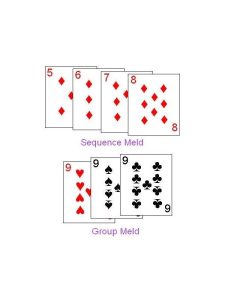
Suppose one hand has several connected cards but each group needs a particular missing rank. Another hand has fewer connected cards, yet one group is complete and the remaining cards have several possible improvements. A simple count may favor the first hand. A dependency view may favor the second because the first relies on more narrow events. Neither method is sufficient alone.
Use card count at the start of a turn to orient yourself. Identify completed groups, partial groups, and loose cards. Then convert each unfinished group into a dependency statement: “This route needs one of these cards,” or “This route needs two related improvements.” Include dependencies created by your own planned discard. A card can be useful now but costly if removing it breaks two routes at once.
Compare not only the number of dependencies but their flexibility. One route needing any of six cards may be healthier than a route needing one card that looks close. Also compare the consequences of a miss. If a missed draw leaves a useful fallback, the dependency is less dangerous than one that strands several cards.
The two methods are most useful together late in a round. Card count tells you whether you have enough progress to justify patience. Dependencies tell you whether patience is likely to pay. If the count is high but the dependencies are narrow, begin simplifying. If the count is modest but the routes are flexible, another turn may be reasonable.
The method is compatible with different scoring systems because it evaluates structure rather than promising a particular result. Keep local rules, declaration conditions, and opponent behavior in the final judgment.
Avoid turning this into false precision. The point is not to calculate a perfect percentage from incomplete information. It is to notice when a visually attractive hand is supported by only one fragile assumption. Review one hand each session using both lenses, and your instinct for structure will become more reliable.