Rummy Comparison: Visual Sorting Versus Mental Sorting
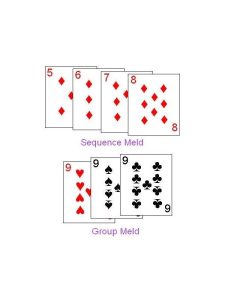
Visual sorting places cards into a visible order by suit, rank, or potential group. Mental sorting keeps the physical layout unchanged while you track roles in your head. Visual sorting reduces memory demand, while mental sorting can be faster once the hand is familiar. Neither method is universally better.
Use visual sorting when the hand contains several overlapping routes or when you are learning a new variant. A suit view can reveal connectors, and a group view can show which cards are already committed. The act of moving cards also exposes isolated cards that were hidden inside a long row.
Use mental sorting for routine decisions when changing the layout would create its own confusion. If the interface is small, cards may shift after every draw. In that case, a short naming system—such as “secure group,” “flexible connector,” and “exit candidate”—can keep the important information stable without constant rearrangement.
The strongest process switches views deliberately. Inspect by suit to find sequence possibilities, inspect by group to check completion, then return to the interface’s normal order before acting. At each switch, confirm that no card has been duplicated, hidden, or accidentally selected.
Practice the switch with a timed exercise. Give yourself a hand, sort it visually for thirty seconds, then describe the same hand without looking at the layout. Compare what you remembered: required groups, flexible cards, and the weakest candidate. The gaps identify what to train.
Sorting is a tool for reducing avoidable confusion. Choose the view that answers the current question, and verify the final move against the actual cards rather than against your memory of an earlier arrangement.
If a layout repeatedly causes selection mistakes, replace it even if experienced players prefer it. Reliable visibility is part of sound play.
Your sorting method should serve accurate decisions, not demonstrate expertise. A simple layout that you can verify consistently is a strong choice. Accessibility should influence the choice as well. Larger text, stronger contrast, and less visual clutter may make a particular layout safer, even if it is slower to scan. Do not use a sorting method that hides selected cards or makes the discard target ambiguous. Test the layout in a low-pressure practice hand before using it in a timed game. The best arrangement is the one that lets you identify every card accurately and act without repeated searching. Clarity is more important than matching another player’s preferred screen.