Rummy FAQ: What Is an Information-Rich Discard?
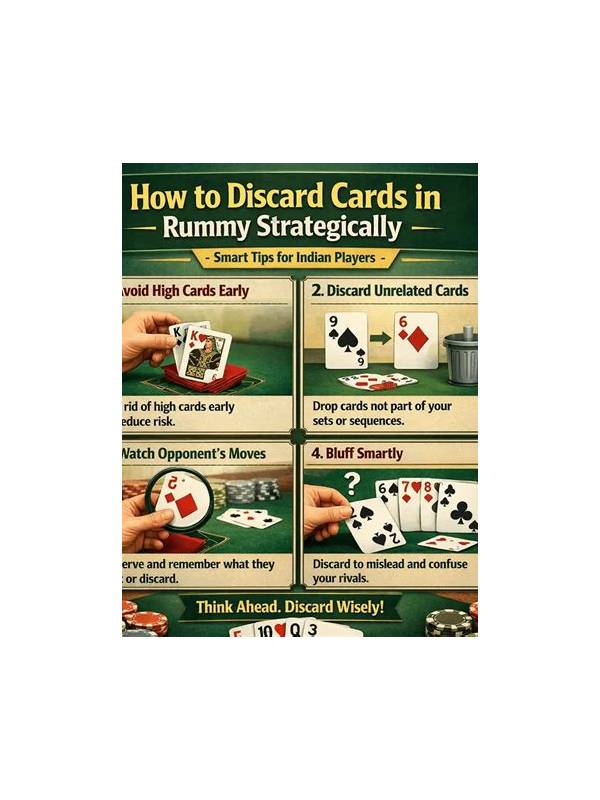
An information-rich discard is a card choice that tells you something useful about your own plan or the visible table. It does not mean revealing a secret or trying to send a message to another player. It means choosing a discard whose consequences are easier to evaluate than those of a random card. The idea is especially useful when several cards appear equally safe.
The phrase does not imply that one discard is objectively best. Information has value only when it helps you make a later comparison. If a card’s history is difficult to remember, record a short note or use a consistent visual arrangement. Avoid filling the record with every visible card. Select the details that can change your route, and leave the rest as background. This keeps information useful rather than turning it into another source of clutter during a timed turn.
First, ask what the discard removes from your own possibilities. A high card with no nearby connection may be easy to release because it has little practical role. A middle card that links two possible sequences carries more information: discarding it tells you that you are deliberately closing one route. Seeing that trade-off helps you judge later draws rather than wondering why the hand became awkward.
Next, consider what the visible discard history lets you infer. If several cards of one rank or suit have already appeared, keeping a related card may be less promising than it looked at the beginning. Conversely, an untouched area of the deck can offer a broader range of possibilities, although it never guarantees a particular draw. Use the record as context, not as proof.
The best information-rich discard is often a card with a clear reason for leaving. You may be protecting a completed group, reducing a dead-end branch, or preserving two independent completion routes. State the reason to yourself before discarding. If you cannot explain the choice in one sentence, compare it with the next-best candidate again.
Do not confuse an information-rich discard with a provocative discard. Throwing a card merely to see whether someone reacts is unreliable and can distract you from your own hand. Online play may also provide no useful reaction at all. Keep your attention on legal combinations, remaining flexibility, and the cost of waiting.
Finally, review the result after the hand. Did the discard clarify your plan? Did it preserve enough options? Did the later draw show that your assumption was too strong? These questions turn a vague feeling into a practical lesson. The concept is valuable because it makes every discard carry a reason, while still accepting that uncertainty is part of rummy.