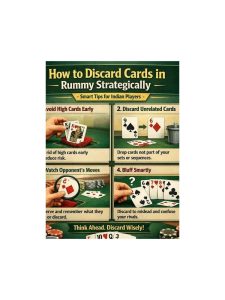
Rummy Guide: Rank Your Best Three Discard Candidates

When a rummy turn gives you several plausible discards, choosing the first card that looks awkward can be a mistake. A better method is to create a short list of three candidates and rank them with the same questions each time. This keeps the decision practical without pretending that every hand can be solved perfectly.
Start by identifying the card that contributes least to any current group. A completely isolated high card is often an obvious candidate, but do not stop at isolation. A low card may also be weak if it has no realistic neighbors and cannot join a useful set. Write or mentally note three candidates before deciding. The act of comparison prevents one attractive possibility from dominating your attention.
Next, inspect structure. Ask what each discard would remove from the hand. If discarding one card breaks a sequence, it must be compensated by a strong reason elsewhere. If another card leaves a pair intact and preserves two possible connections, it may rank higher even if its point value is lower. Structure describes future routes, not merely the current appearance of the cards.
Then compare point exposure. High cards deserve attention because keeping them through a failed hand can be costly. However, point value is a filter, not an automatic command. A high card that is one step from a useful sequence may be better than a low card that is permanently disconnected. Give point exposure more weight when the hand is late, your options are shrinking, or opponents appear close to declaring.
Finally, consider information. A discard can reveal a card that helps another player, especially when it follows a visible pattern in the pile. You cannot know every opponent’s plan, so avoid elaborate guesses. Simply ask whether one candidate is clearly more informative than another. If two cards are equal structurally, choose the one with less obvious utility to others.
Use a simple ranking: best discard, acceptable discard, reserve discard. If the best choice is taken by a forced rule or a new draw, move to the next. After the hand, record whether your ranking was based on structure, points, or table information. This short review builds consistency and keeps future decisions grounded in evidence rather than hindsight.
Keep the language practical. A ranking is a temporary map of the choices available now, which makes it easier to release a route without feeling that an earlier decision must be defended.