Rummy Practice With a Blank Score Sheet
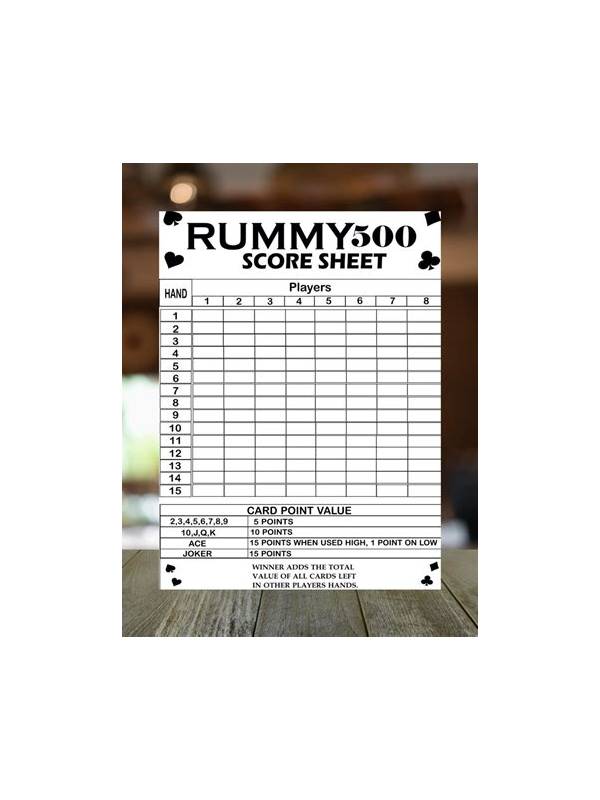
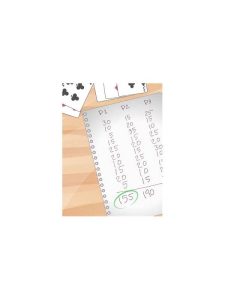
You do not need a live table to practice every rummy skill. A blank score sheet and a standard deck can create a quiet exercise for sorting, checking groups, and explaining decisions. The exercise is not a replacement for the rules of a specific service; it is a way to make your thinking visible before speed and competition are added.
Write the names of the formats or hands you want to examine across the top of the sheet. Under each, leave space for the groups, ungrouped cards, and a short reason for the discard. Deal a practice hand according to the rules you are studying, then arrange it without drawing additional cards. The first task is simply to identify every completed group and every card that still needs a role.
Next, create two possible arrangements. One can favor the most immediate completed groups, while the other can preserve more flexible connections. Do not decide which is better by looking only at the final result. Write the benefit and cost of each arrangement. This makes the tradeoff between certainty and flexibility easier to discuss.
For a discard exercise, circle one candidate and write why it is removable. Then choose a different candidate and write why it might be retained. If a card carries a large penalty under the format, record that separately from its grouping potential. This teaches you to consider both hand structure and risk without pretending that either one decides every situation.
Use the bottom of the sheet for a declaration audit. Check the required sequence, the set rules, the treatment of jokers, and any minimum group conditions. Mark each item only after inspecting the actual arrangement. If a rule is unclear, consult the official rules for the format before practicing that example.
Keep the exercise short. Ten or fifteen minutes is enough for one hand and one question. Photographing the sheet is unnecessary if it contains no lesson you need to keep, and any saved image should avoid account or personal details. Repeating the exercise with a fresh hand builds the habit of explaining choices. When you later play online, the same audit can be adapted to the app’s timer and interface.
For an extra lesson, ask another learner to inspect the arrangement without seeing your written reasons. Compare where your explanations agree and where the rule language needs clarification. Keep the discussion about the cards and the published format, not about who made the “right” prediction. The goal is clearer reasoning.