Rummy FAQ: What Is a Stable Group Worth During a Change of Plan?
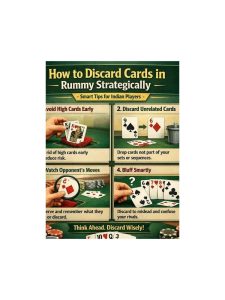
A stable group is a valid sequence or set that no longer needs another card. Players sometimes assume it should never be reconsidered. In most hands, keeping a valid group is sensible, but its practical value still depends on the rules, the scoring system, and the condition of the unfinished cards.
The first question is whether the group satisfies a required foundation, such as a pure sequence in formats that use that rule. If it does, it may have structural value beyond its points. Breaking it could remove the hand’s only secure route to a valid declaration. Check that requirement before considering any rearrangement.
The second question is whether the group is doing useful work. A low-point completed group may reduce risk and let you focus on the rest of the hand. A high-point group can also be valuable because it removes penalty from your loose cards. However, neither fact automatically compensates for an unfinished hand that is becoming harder to repair.
Reconsideration usually makes sense only when a new draw creates a clearly stronger arrangement. For example, a card might allow two partial groups to become one secure sequence while another existing group can be replaced by a safer structure. Avoid breaking a group merely because a speculative possibility appears. Require a concrete improvement, not a vague hope.
Keep the table’s pace in mind. Near the end of a round, stability usually deserves more weight than flexibility. Early in a round, you may have time to compare routes, but you still need a reason to increase complexity. A plan with one stable group and one repairable fragment can be better than a plan with several attractive fragments and no anchor.
If you are unsure, label the group “protected,” “replaceable,” or “uncertain.” Protected means it fulfills a necessary condition. Replaceable means another arrangement could clearly improve the hand. Uncertain means you need one piece of evidence before acting. This vocabulary prevents an automatic rule from replacing judgment and makes post-game review easier. In a practice review, place the group aside and examine the unfinished cards separately. This makes its protective value visible: perhaps it lowered the penalty, satisfied the foundation, or simply reduced the number of decisions. If it did none of these things, its value may have been assumed rather than measured. That observation can guide the next hand without requiring you to change a valid rule during live play.